Blog

The City of the Gods and the Discipline of Fantasy World Systems

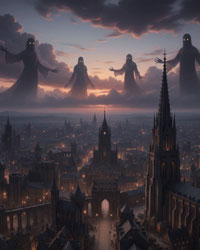
Jason Patterson’s The City of the Gods demonstrates how structured systems, defined authority, and controlled power can elevate fantasy beyond spectacle. The novel establishes a world governed by divine presence while remaining anchored in human consequence. This balance allows fantasy to function as an examination rather than a diversion.

Rather than presenting a setting driven by excess or abstraction, the book introduces a city shaped by laws, beliefs, and enforcement. Readers encounter a functioning society in which mythology guides policy and power is never without limits. The result is a fantasy that prioritizes coherence and accountability.

blogs

System-Based Fantasy and World Stability

Many fantasy works rely on scale to impress. The City of the Gods relies on stability. The city exists as a system with identifiable boundaries, roles, and consequences. This structure creates credibility and sustains tension.

The fantasy setting does not shift at the author's convenience of the author. Rules remain consistent. Authority follows order. When conflict occurs, it disrupts a system that readers already understand.

Between this section and the next, it is important to recognize how discipline strengthens immersion. Readers invest when a world behaves predictably under pressure.

Governance as a Fantasy Engine

Governance in the city functions through layered authority. Divine power sits at the top, followed by appointed intermediaries and civic enforcers. This arrangement produces friction rather than chaos.

Fantasy here operates through administration. Decisions affect populations. Policy generates consequences. Readers witness the cost ofthe order.

This approach distinguishes the novel from fantasy centered on prophecy or destiny. Outcomes arise from governance, not fate.

Law, Enforcement, and Social Control

Law exists because gods demand order. Enforcement follows clear protocols. Punishment reinforces belief.

This legal structure sustains narrative momentum without resorting to sudden conflict. Tension grows through anticipation rather than surprise.

The city remains intact even under strain, reinforcing realism within the fantasy frame.

Mythological Authority Without Abstraction

Mythology in The City of the Gods functions through presence and expectation. The gods do not exist as distant ideals. They influence daily life.

Belief becomes obligation. Ritual becomes compliance. This direct application prevents mythology from becoming symbolic or decorative.

Between this section and the next, it is necessary to emphasize how mythological systems gain power through consistency rather than mystery.

Divine Presence and Human Limitation

The gods impose limits. Their authority restricts movement, speech, and ambition.

Characters operate under constant awareness of oversight. This pressure replaces randomness with intent. Fantasy benefits when divine power produces restraint rather than chaos.

Superhero Ethics in a Controlled Environment

Although rooted in fantasy, the novel applies ethical structures often associated with superhero fiction. Power demands responsibility. Visibility invites judgment.

Characters with elevated ability do not escape consequence. Their actions carry public impact.

This ethical framework strengthens conflict without reliance on spectacle.

Ability Without Autonomy

Enhanced figures operate within restrictions. Authority monitors power.
This approach rejects the idea of unchecked strength. Responsibility defines capability.
Readers familiar with superhero traditions will recognize this moral discipline.

Public Perception and Risk

Public trust remains fragile. One misstep alters allegiance.
This social pressure creates tension without excessive action. Conflict develops through scrutiny.
Superhero logic reinforces realism within the fantasy system.

Character Function Over Transformation

Character development in The City of the Gods emphasizes function rather than reinvention. Individuals adapt to pressure rather than escape it.
Growth occurs through adjustment, compromise, and decision. This method avoids excess introspection.
Between this section and the next, it is worth noting how restraint supports credibility.

Role-Based Identity

Characters occupy defined roles. Identity emerges through responsibility.
This approach reflects real systems where choice operates within structure.
Fantasy gains depth when identity aligns with obligation.

Ethical Decision Making

Moral conflict arises from competing duties. Choices carry cost.
Readers engage with consequence rather than sentiment.
This discipline sustains narrative integrity.

Language, Control, and Narrative Stability

The prose maintains consistency. Sentences prioritize clarity and intent.
Dialogue serves function. Description supports structure.
Fantasy benefits when language reinforces order. The novel maintains that alignment.

Why The City of the Gods Stands Apart in Fantasy

The novel demonstrates that fantasy thrives through discipline. Mythological systems, superhero ethics, and civic governance operate together without dilution.
Readers seeking structure, accountability, and consequence will find sustained engagement.
The book respects its audience's intelligence by maintaining internal logic.

Where Fantasy Holds Its Authority

The City of the Gods proves that fantasy gains authority through structure. By aligning mythological governance with superhero ethics, the novel sustains tension without excess. Readers encounter a city that functions under pressure and characters shaped by responsibility. In a genre defined by possibility, this work shows how fantasy holds its ground by respecting its own rules.

Learn more about Jason Patterson and his work by visiting the official author website: Jason A. Patterson.

Purchase The City of the Gods on Amazon: The City Of The Gods.

Image 1
Image 2
Image 3
Image 4
Image 5

Write to the Author

Jason would love to hear your thoughts.

© 2025 Dr. Jason A. Patterson | All rights reserved.